If you've been cleaning electronics with disposable compressed air cans, you've probably noticed a few problems: they lose pressure as they get cold, they can spray freezing liquid onto your components, and you have to keep buying new ones. Electric air dusters solve all three issues — but are they worth the upfront cost?
Power and Consistency
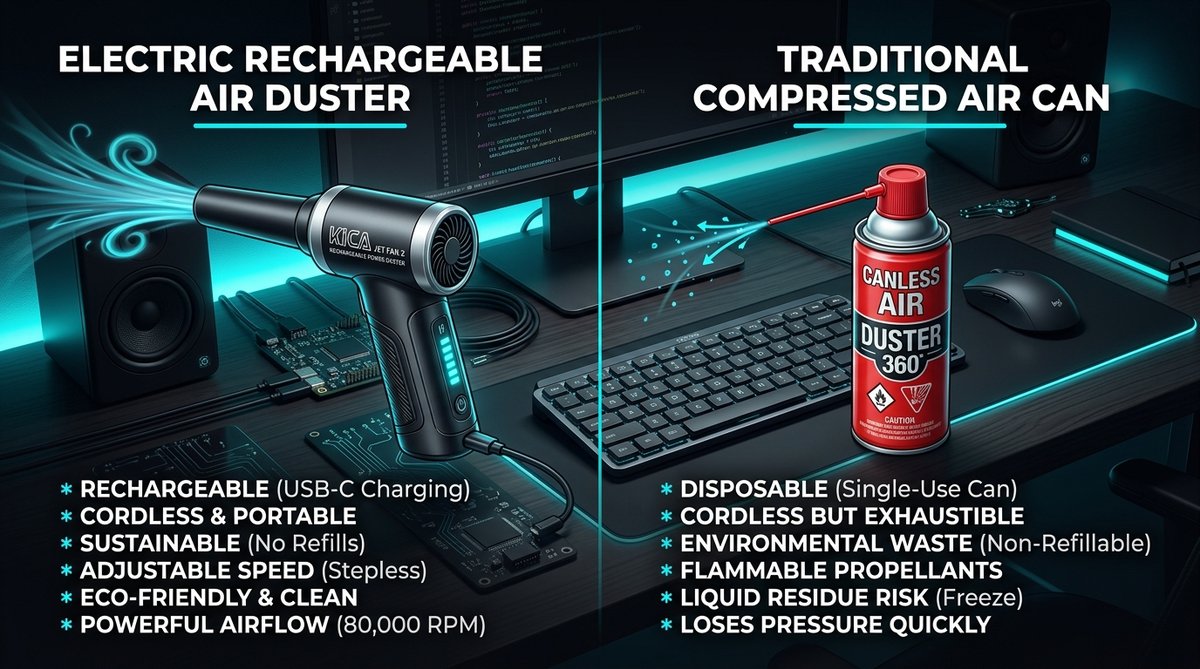
Compressed air cans start strong but lose pressure within 30-60 seconds of continuous use. As the can gets cold, the propellant becomes less effective, and airflow drops noticeably. You have to stop and wait for the can to warm up before continuing.
Electric air dusters don't have this problem. A brushless motor spinning at 110,000 RPM delivers consistent airflow from start to finish. The Elevate Endure duster maintains full power for up to 50 minutes on a single charge, with no pressure drop-off.
Safety for Electronics
The biggest risk with compressed air cans is liquid spray. When you tilt a can or use it continuously, the liquid propellant can escape and freeze your components. This can damage sensitive electronics, especially camera sensors and motherboard components.
Electric dusters use only air — no propellants, no liquids. The airflow is dry and safe for all electronics, as long as you use the appropriate speed setting for delicate components.
Cost Over Time
A typical compressed air can costs $6-8 and lasts for about 10-15 cleaning sessions. If you clean your PC or keyboard weekly, that's $300-400 per year on canned air.
An electric air duster costs $35-40 upfront and lasts for years. The only ongoing cost is electricity for charging, which is negligible. Most people recover the cost within 2-3 months.
Environmental Impact
Compressed air cans are single-use and contain chemical propellants. Over a year, a regular user might go through 30-50 cans, all of which end up in landfills.
An electric duster replaces all of those cans with one rechargeable device. No chemical propellants, no disposable metal cans, no waste.
When to Use Each
Electric dusters are the better choice for regular electronics cleaning — PCs, keyboards, cameras, and desk equipment. They're more powerful, safer, and cheaper over time.
Compressed air cans still have a place for occasional, light-duty cleaning where you don't want to invest in a rechargeable tool. But for anyone who cleans their devices more than once a month, an electric duster is the clear winner.
Conclusion
Electric air dusters outperform compressed air cans in every category that matters: power, consistency, safety, long-term cost, and environmental impact. If you maintain electronics regularly, switching to a rechargeable duster is one of the simplest upgrades you can make.